Southwest Pathology Services Takes Haematology to a New Level with Fully Digital Workflows
A high-volume, multi-site NHS lab network eliminates physical slide transport and enables real-time remote collaboration* with Scopio.
7 minutes
from slide to screen
3 sites
30 miles apart, fully connected
170,000
slides scanned per year
0
slide transport for consultant reviews
About Southwest Pathology Services
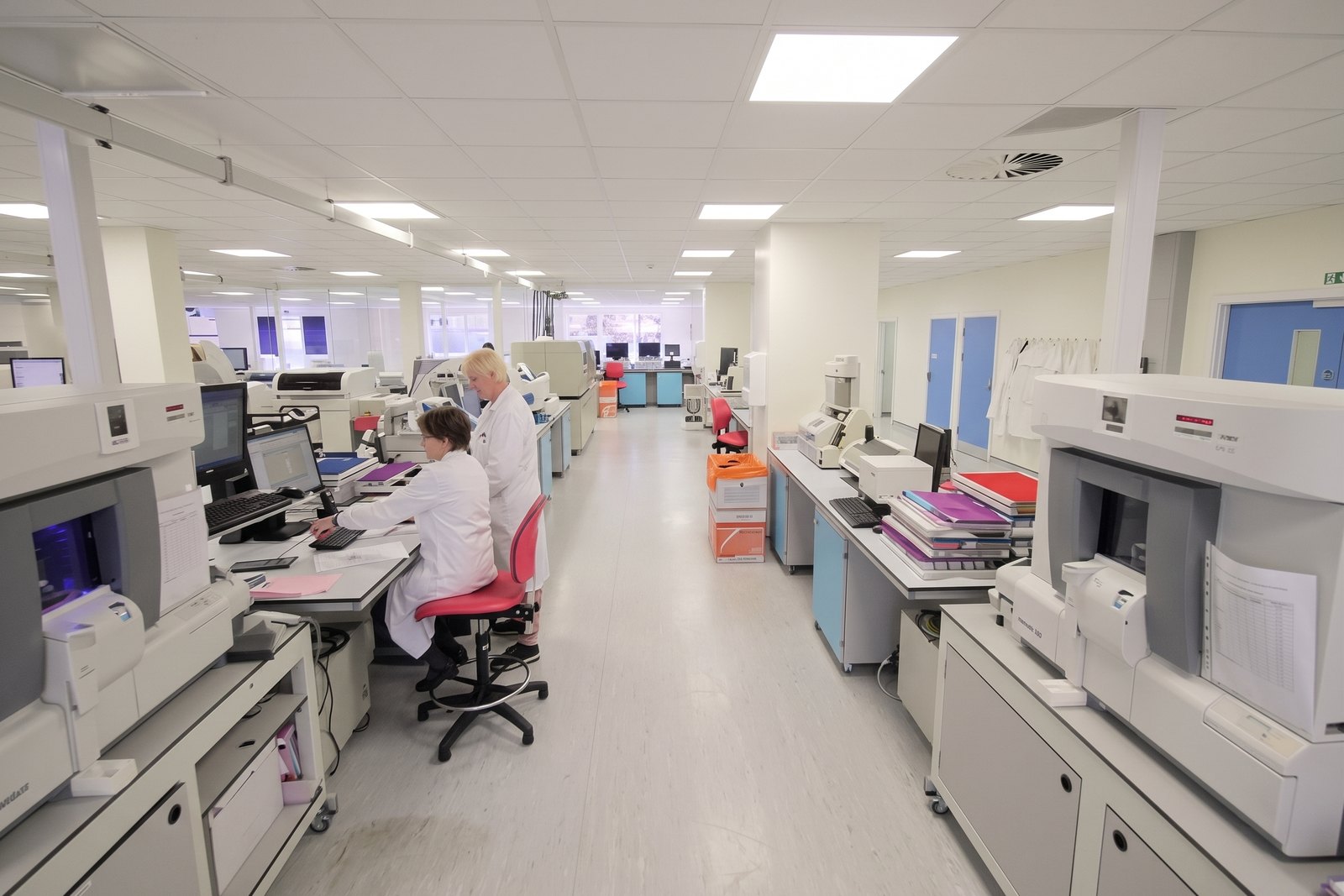
Southwest Pathology Services (SPS) is a joint venture between SYNLAB and Somerset NHS Foundation Trust, serving a population of approximately 600,000 across Somerset, England. The partnership delivers diagnostic services through a central Hub Laboratory in Taunton and two Essential Service Laboratories at Musgrove Park Hospital (700 beds) and Yeovil District Hospital (345 beds) - located 30 miles apart.
SPS processes up to 3,000 full blood counts every day across its network and scans approximately 170,000 slides per year. The labs operate around the clock at both hospital sites, with haematology consultants based exclusively at Musgrove Park Hospital.
SPS was one of the first NHS laboratory networks in the UK to implement digital peripheral blood smear scanning and remote reporting with Scopio, through the secure hospital network.
The challenge
Running a high-volume haematology service across three geographically dispersed sites created persistent operational challenges for SPS:
Getting urgent cases to the right expert, fast. With all eight haematology consultants based at Musgrove Park Hospital, urgent blood films from the Hub Lab in Taunton or Yeovil District Hospital had to be physically transported for expert review. This meant arranging taxis for slides or waiting for couriers - adding hours of delay for time-sensitive cases like suspected acute leukaemia.
24/7 coverage with limited specialist availability. Both hospital labs operate around the clock, but morphology expertise was not always available on-site, especially during evenings, nights, and weekends. When less experienced staff encountered cases with varied morphologies, reaching a senior colleague for guidance often meant a phone call and a best guess - or waiting until morning.
Maintaining consistency across sites and experience levels. Staff morphology review experience ranged from a few months to over 20 years. Ensuring consistent, high-quality peripheral blood smear interpretation across that spectrum - and across three locations - was an ongoing challenge.
Limited slide storage and access. Physical slides were stored for only about seven days. When a GP contacted a haematology consultant weeks after a blood test for clinical advice, the original slide was often no longer available, potentially requiring repeat testing.
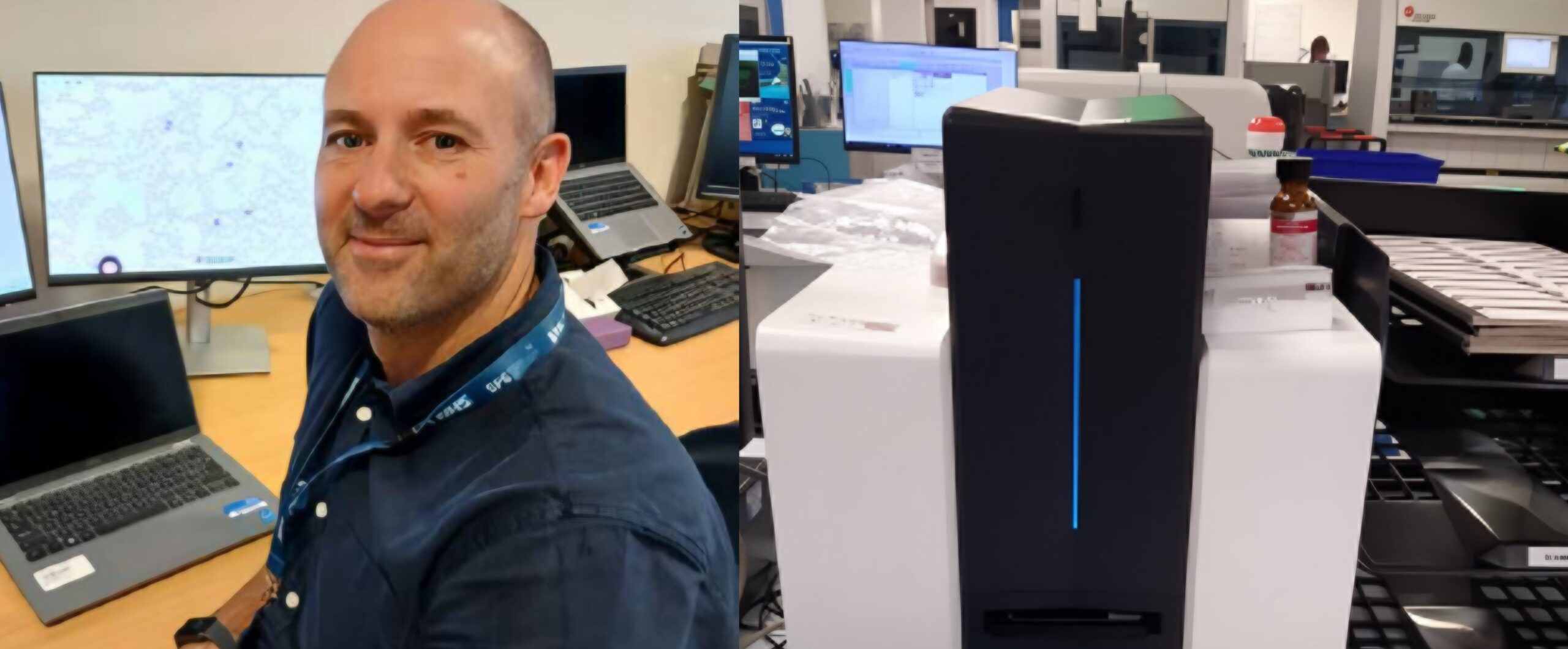
Scopio was very straightforward to introduce. At first, we kept the microscope in the lab and encouraged staff to use it as they became comfortable with the new system. Very quickly and very early on, no one was using the microscope anymore.
The solution
SPS converted from manual microscopy to fully digital workflows by deploying three Scopio X100 scanners and the Full-Field Peripheral Blood Smear Application across all three laboratory sites. Every slide flagged for morphology review is now scanned and made available digitally for review on screen.
The transition was designed to feel familiar. Evaluating a blood film on the Scopio platform mirrors the experience of using a microscope - scrolling with a mouse to navigate the Full-Field image, adjusting resolution levels, and examining individual cells in context. The difference is that everything happens on screen, and the scanned image is instantly accessible to anyone with authorized network access.
The results
Faster Analysis and Decision-Making
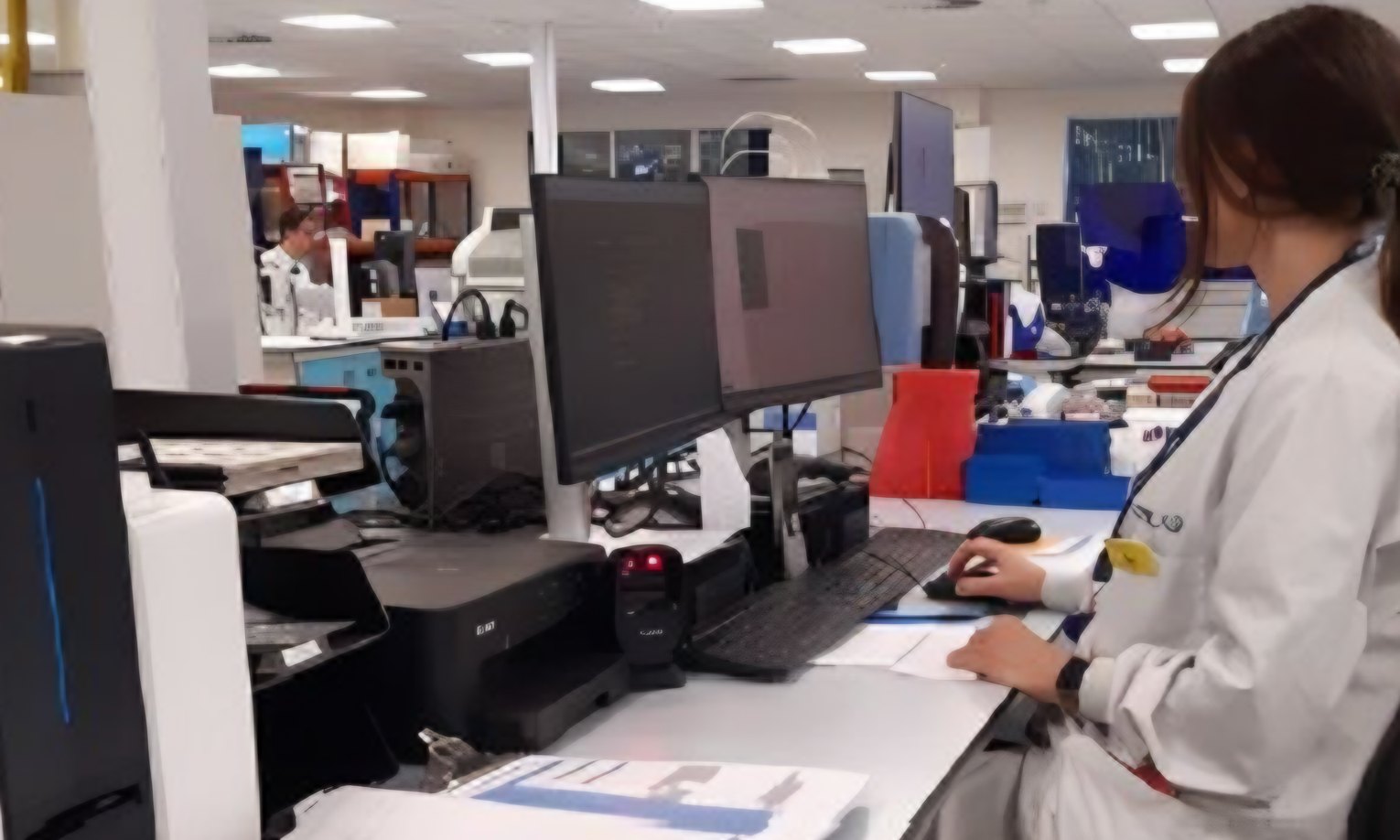
With Scopio, it takes just seven minutes for SPS to complete a scan, at which point the Full-Field image is available digitally to consultants across the secure hospital network. Haematology consultants can instantly review urgent samples at any hour of the day or night without waiting for physical delivery of a slide - or having to travel to the hospital to use a microscope.
Scopio’s AI-powered decision support plays a key role in quickly detecting immature white cells, particularly blast cells in acute leukaemia cases, and identifying platelet clumps - capabilities that exceeded SPS’s initial expectations.
“It can identify platelet clumps, and these are going to be great improvements, great benefits above and beyond what I expected Scopio to be able to do.” - Jeffrey Moores, Advanced Practitioner Haematology
Remote Access That Changes Everything
The ability to review cases remotely has transformed how SPS operates as a multi-site network. Consultants based at Musgrove Park Hospital can now review slides from all three sites without leaving their office. During evenings and weekends, they can log in from home to assess urgent cases.
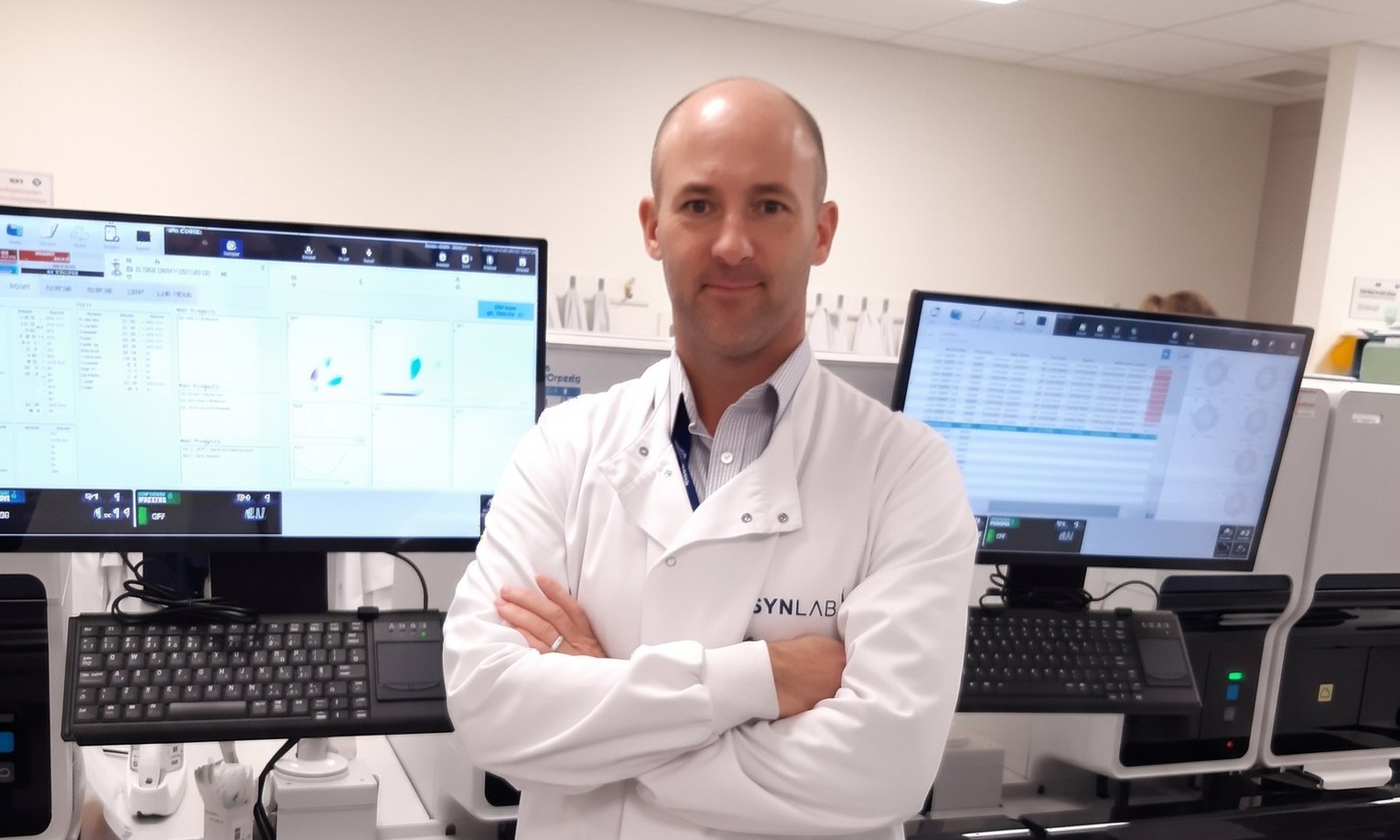
“In seven minutes, the images are readily available to the consultant, so they can make essential decisions immediately - within minutes rather than hours.”
In one recent week alone, two GP patients presented with abnormal results in the evening that raised concern for acute leukaemia. In both instances, the biomedical scientist scanned the blood films on Scopio and contacted the haematology consultant at home. The consultant reviewed the films remotely the same evening - no taxi for a physical slide, no drive to the hospital. Samples were actioned for flow cytometry testing the following morning, and patients were admitted to hospital faster.
Digital images are also stored for several weeks rather than the seven days typical of physical slides. This means when a GP contacts a haematology consultant for advice weeks after a blood test, the consultant can instantly access the original blood film - supporting quicker clinical decisions and potentially avoiding unnecessary repeat testing.
Seamless Adoption Across All Experience Levels
SPS made the transition gradually, keeping microscopes available while staff got comfortable. The shift happened faster than expected. Staff found the on-screen workflow intuitive from the start, and within a short period, no one was reaching for the microscope anymore.
Training and Continuing Education
In-house training has become significantly easier compared to the traditional double-headed microscope. Staff can discuss cells and images together on screen, and more experienced team members can support less experienced colleagues remotely when they are unsure about a case. Digital reports also serve as evidence for continuing professional development (CPD).
SPS has taken this further by launching a Blood Film Club - a CPD program open to the wider region where haematology consultants present blood films via Scopio on Microsoft Teams, extending the educational value of the platform beyond SPS’s own staff.
“It's very easy for me to share those images across sites, across different teams, 24 hours a day, including with the consultant and the haematologists. Then, we can get the right outcomes for those patients - not only in terms of more accurate and quality results but also quicker diagnosis.”
Blood Film Club screenshot showing Dr. Lisa Lowry presenting blood films via Scopio on Microsoft Teams
Real-World Clinical Impact
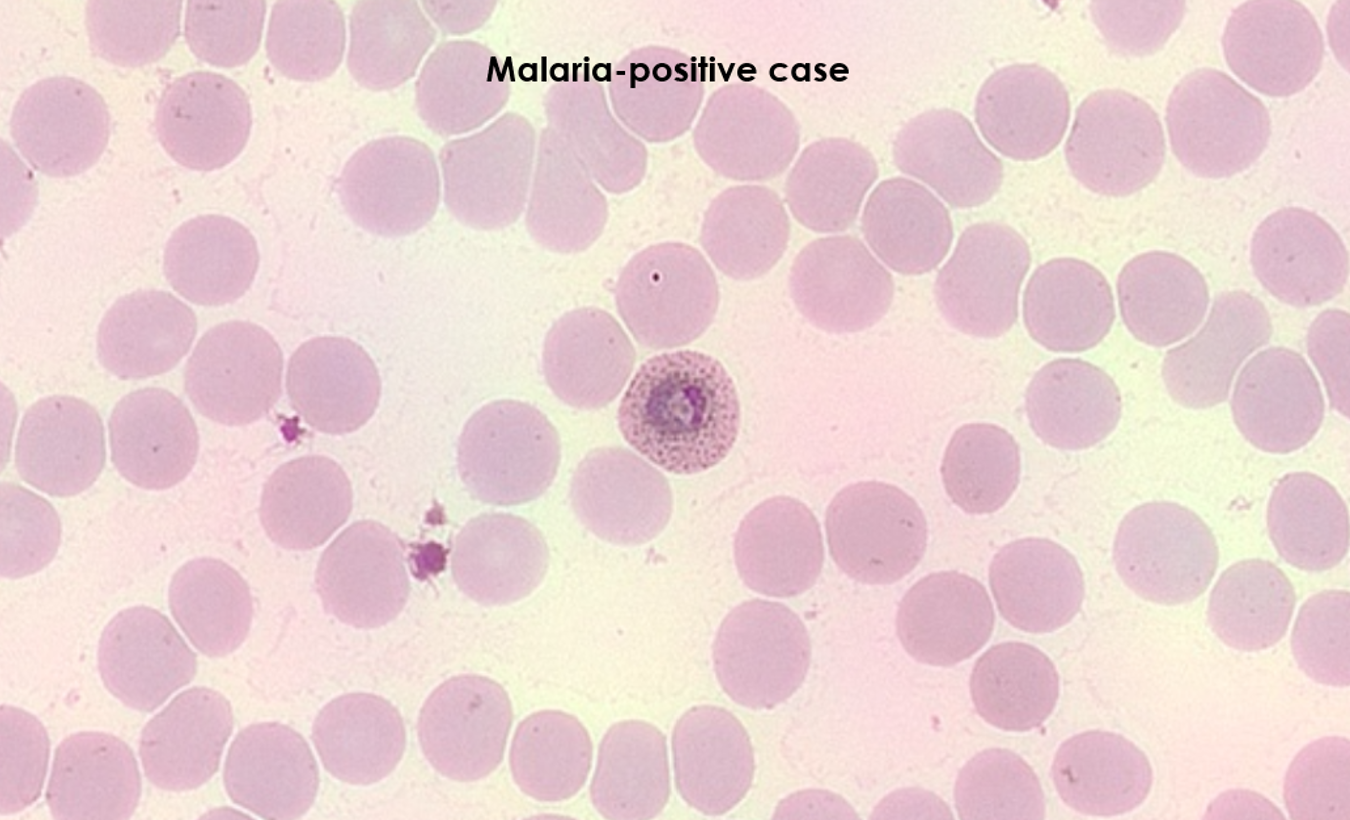
Beyond routine workflow, Scopio has proven its value in urgent and unexpected clinical scenarios at SPS. In March 2026, a malaria-positive case was identified on a Saturday at Musgrove Park Hospital’s A&E department - with the Full-Field image enabling rapid identification and confirmation.
“Using the Scopio system, I can detect and identify the abnormal cells easier. We can make quicker decisions. I can explain the case so much easier and clearer.”
Looking ahead
SPS is exploring further applications of Scopio technology, including bone marrow aspirate reporting to support quality reports and enable remote access for integrated reporting and multidisciplinary team meetings. The potential to store digital bone marrow images in place of physical slides - which currently require 30 years of retention - represents another significant opportunity.
“Scopio is a fantastic way to share more accurate results and quality results, but also quicker diagnosis.”
From quickly identifying cells with varied morphologies to getting instant consultations around the clock, Scopio digital technology has empowered the busy haematology team at Southwest Pathology Services to work more efficiently, accurately, and confidently. Watch this video to hear their story.