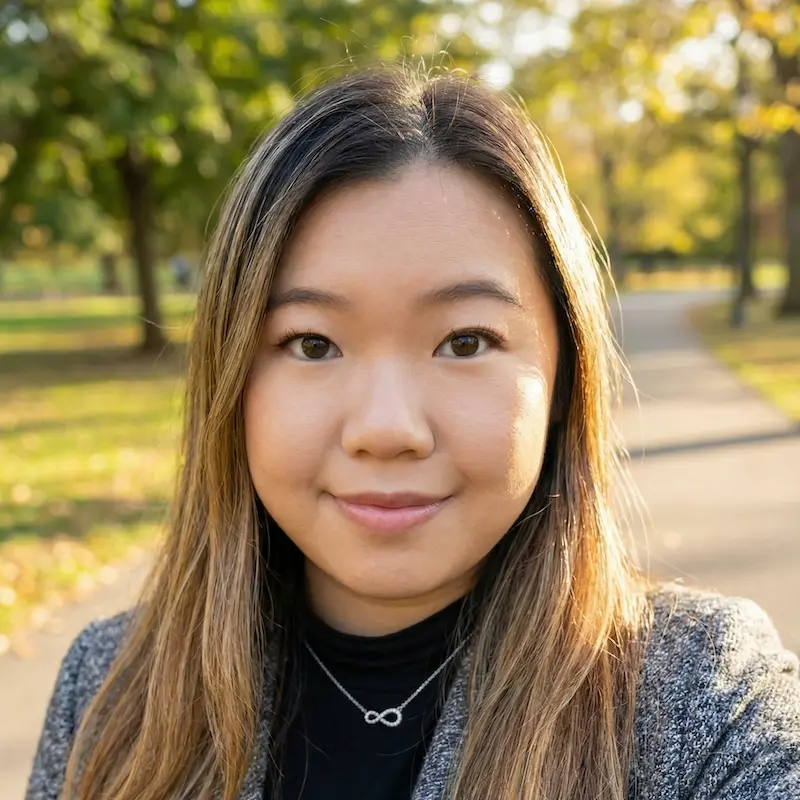
Katrina is a certified Biomedical Scientist with diverse laboratory experience spanning NHS hospitals, commercial diagnostics, and academic research. She has worked across hematology applications with Abbott and in clinical pathology at East Lancashire Hospitals NHS Trust, bringing expertise in quality assurance and laboratory workflow optimization. At Scopio Labs, Katrina supports clinical teams across UK, EMEA, LATAM, and APJ regions in implementing digital morphology solutions, combining her scientific background with a passion for improving patient care through laboratory innovation.
In a recent webinar: "Making Science Out of Art, Digitization, and Context in Full Field Morphological Hematology", one of the world’s leading experts in hematology provided her perspective on the integration of digital blood sample review and expertise, presenting three fascinating case studies that illustrate how the art and science of diagnostic hematology can work together for the good of patients.
In a world that demands meticulous attention to detail and accuracy, the speciality of hematology is certainly no exception. The accuracy of platelet (PLT) estimates from peripheral blood smears is essential for reliable reporting. Presence of PLT clumps can introduce uncertainty, compromising the reliability of numerical estimates generated by automated whole blood analyzers. To address this, an effective system should be able to detect and identify PLT clumps with a sensitivity approaching 100%.
In today’s world it is all eyes on AI with Artificial Intelligence having catapulted us into a new fast-paced reality. This tenet holds especially true within the healthcare setting, whereby this transformative force holds the golden promise of heightened diagnostic accuracy, reduced costs, and improved patient response times and treatment outcomes.
Nearly a quarter of all hematology labs analyze more than 100 peripheral blood smears (PBS) every day, yet the vast majority are still performed manually using an optical microscope. That disturbing statistic is just one creating a growing crisis in the hematology lab. In the age of widespread digitization in healthcare and across industries, hematology laboratory procedures are falling behind. And it's that misalignment that planted the seeds of Scopio Labs.
But, what if this high-resolution, large-scale cell morphology was no longer a fantasy? What if instead of being forced to sacrifice field of view or resolution, you could see the big picture and the tiniest details at the exact same time? Enter, Full-Field Cell Morphology.
Counting and classifying blood cells is one of the oldest laboratory methods available for the evaluation of a patients’ health. Revealing both quantitative and qualitative data, the complete blood count (CBC) and complete blood count with differential (CBC w/diff) tests are the most commonly performed tests in the clinical hematology laboratory to this day.